
Catch up TV


The UK Space Race
The Sky at Night team investigates the incredible science and engineering helping the UK to blast into space. We are now one of the biggest satellite building nations in the world, and the race is on to be the first company to successfully launch a rocket into orbit from British soil.\n\nChris visits Skyrora, a rocket company near Glasgow, to find out how rockets are built and why launches so often go wrong. Skyrora are planning their first orbital launch later this year; Chris learns how each stage of their rocket is designed for a successful lift-off.\n\nMaggie is given a sneak preview of the brand new National Satellite Test Facility. Until now British-built satellites have been shipped abroad for the final tests of whether they can withstand the harsh environment of space. But this is all about to change with the opening of the huge NSTF. Maggie sees how a satellite up to 7,000kg will be vibrated to simulate launch conditions. She steps inside the vacuum chamber where they will be exposed to extreme temperatures. And she sees the construction of the enormous EMC, where communication signals can be tested in secret.\n\nA result of the rapidly expanding space industry is that nearly 900 objects have been launched into space in the last year. Chris meets Professor Andy Lawrence to talk about the impact this is having on astronomy and the images captured by telescopes such as Hubble. \n\nAnother key issue is space debris – shrapnel from defunct missions and missile tests. Astronomers are currently keeping track of more than 23,000 pieces of debris larger than 10cm, and this space junk poses a danger to new satellites as well as the astronauts on board the ISS. Radio astronomer Professor Danielle George visits Clearspace, a company hoping to solve the space junk problem with technology designed to gently capture this debris in orbit.\n\nAnd our in-house stargazing expert Pete Lawrence shows us why June is a great month for solar observing as well as the summer asterisms.
Source: BBC 4
Most recent episodes of The Sky at Night
The Sky At Night

Space For Different Perspectives
When most people think of dyslexia, they think of difficulties in reading and writing. But while this is correct, it isn’t the full picture. In this episode, Maggie Aderin ...
13-10-2026
BBC 4

The Sky At Night

Engineering The Universe
Chris Lintott and the team explore the extraordinary engineering, both on Earth and millions of kilometres above it in space, that is transforming modern astronomy and revealing ...
15-09-2026
BBC 4
The Sky At Night

Big Black Holes And Little Red Dots
Professor Brian Cox joins the team to explore one the greatest current mysteries in astronomy - little red dots. Discovered by the James Webb Space Telescope (JWST), they have u ...
11-08-2026
BBC 4
The Sky At Night

The Aliens Next Door?
Could alien life exist closer than we think - perhaps right next door? A paper published in 2025 suggested that strange markings discovered on Mars could provide some of the str ...
15-07-2026
BBC 4
The Sky At Night

Space Weather: The Perfect Storm
Life on Earth depends on the sun for its light and its warmth. But the activity of our nearest star also poses a serious threat to all of us. In the most extreme cases, solar st ...
09-06-2026
BBC 4
The Sky At Night
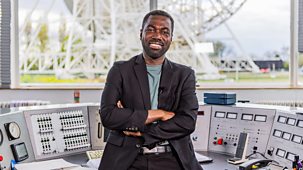
Jodrell Bank: Tuning Into The Universe
It started 80 years ago with a field, army surplus, wartime radar and a visionary idea - and it changed how we see the universe forever. In this episode, we step inside the rema ...
12-05-2026
BBC 4
The Sky At Night
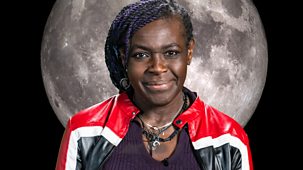
Destination Moon
Maggie Aderin, self-proclaimed lunar-tic, examines Nasa’s Artemis II mission: the first crewed journey towards the moon in more than 50 years. It’s a mission designe ...
14-04-2026
BBC 4
The Sky At Night

Space Mysteries: The Sky At Night Meets Curious Cases
Do aliens exist, and can we talk to them? What does a black hole sound like? Does the universe look like a doughnut? In a spectacular season finale, The Sky at Night teams up wi ...
13-11-2025
BBC 4
The Sky At Night
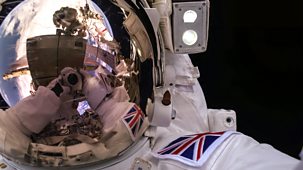
Brits In Space
Three, two, one, lift off! This edition launches into the extraordinary - and extraterrestrial - world of astronaut training, discovering what it truly takes to become a Europea ...
15-10-2025
BBC 4
The Sky At Night

The Expanding Universe
The team explores one of the greatest discoveries of modern astronomy - that our universe is expanding - and the new questions it raises about how the cosmos works.\n\nIn the 19 ...
10-09-2025
BBC 4
Most popular episodes of The Sky at Night
The Sky At Night
Space For Different Perspectives
When most people think of dyslexia, they think of difficulties in reading and writing. But while this is correct, it isn’t the full picture. In this episode, Maggie Aderin ...
13-10-2026
BBC 4
The Sky At Night
Engineering The Universe
Chris Lintott and the team explore the extraordinary engineering, both on Earth and millions of kilometres above it in space, that is transforming modern astronomy and revealing ...
15-09-2026
BBC 4
The Sky At Night
The Aliens Next Door?
Could alien life exist closer than we think - perhaps right next door? A paper published in 2025 suggested that strange markings discovered on Mars could provide some of the str ...
15-07-2026
BBC 4
The Sky At Night

Webb Telescope: The Story So Far
In July 2022, the James Webb Space Telescope released its first images. They were visually stunning, and it was clear they provided more detail of stars, galaxies and planets th ...
11-07-2024
BBC 4
The Sky At Night
Big Black Holes And Little Red Dots
Professor Brian Cox joins the team to explore one the greatest current mysteries in astronomy - little red dots. Discovered by the James Webb Space Telescope (JWST), they have u ...
11-08-2026
BBC 4
The Sky At Night
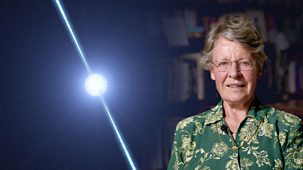
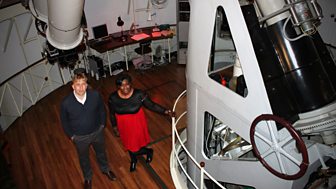
Queen Of Pulsars
Dame Jocelyn Bell Burnell is a discoverer and an explorer of the distant cosmos, and she has walked among the stars. She discovered the first pulsar in 1967 - a discovery so imp ...
14-08-2025
BBC 4
The Sky At Night
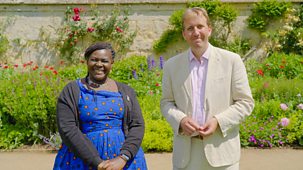
The Sky At Day
The British weather is often the enemy of stargazers up and down the country. A forecast of a couple of hours of cloud cover will disappoint even the most determined amateur ast ...
13-07-2022
BBC 4
The Sky At Night

Photographing The Universe
For centuries, humans have been drawing what they see in the night sky through telescopes. But there is something about a photograph that can make you feel you are right there, ...
15-09-2022
BBC 4
The Sky At Night

Gaia: A Galactic Revolution
For past three and a half years, ESA's Gaia Space telescope has been mapping the heavens in unprecedented detail. At the end of April 2018 it released precise data on over 1.3 b ...
17-05-2018
BBC 4