
Catch up TV


The Expanding Universe
The team explores one of the greatest discoveries of modern astronomy - that our universe is expanding - and the new questions it raises about how the cosmos works.\n\nIn the 1920s, astronomers studying galaxies realised they were moving away from us, with the most distant ones receding the fastest. The\nconclusion was revolutionary: space itself was stretching, and the universe was expanding in every direction. But once this discovery was made, a new challenge emerged – how fast is the universe expanding, and what could that tell us about its age, size and ultimate fate?\n\nChris Lintott travels to the University of Oxford to explore one of the most extraordinary tools astronomers use to answer these questions - the cosmic microwave background (CMB), the faint afterglow of the Big Bang. Working with Professor David Alonso, Chris learns how scientists use the CMB as a starting point for measuring cosmic expansion. He discovers how the Simons Observatory, a network of telescopes in Chile, is creating the sharpest map yet of this ancient light. These observations promise to refine our understanding of the expansion rate and may shed light on a long-standing puzzle known as the 'Hubble tension', where different measurements of expansion don’t agree.\n\nMeanwhile, Maggie Aderin-Pocock investigates a different cosmic speedometer: supernovae, or exploding stars. Meeting Dr Philip Wiseman at the University of Southampton, she learns how type 1a supernovae, which shine with a predictable brightness, can be used to measure cosmic distances. A discovery in the 1990s revealed something astonishing - not only is the universe expanding, but the expansion is accelerating. The Vera Rubin Observatory, with its enormous mirror and world-record-breaking camera, is about to survey the southern skies, capturing supernovae in unprecedented numbers. With its data, astronomers hope to refine how fast the universe’s expansion has accelerated over billions of years.\n\nGeorge Dransfield takes on the most mysterious part of the story - dark energy. Coined to explain the force driving the acceleration, dark energy remains entirely unknown. At the University of Portsmouth, George meets Dr Seshadri Nadathur, who is part of the Dark Energy Spectroscopic Instrument (DESI) project. By mapping tens of millions of galaxies across 11 billion years of cosmic history, DESI is building the largest 3D map of the universe ever made. This map is revealing subtle patterns in how galaxies are distributed, providing new insights into how fast the universe has expanded over time – and whether dark energy itself has changed throughout cosmic history. Together, these projects reveal both the power and the limits of our current models of cosmology. Different methods of measuring expansion don’t line up, and far from being a mistake, this mismatch may be a vital clue that new physics is waiting to be discovered.\n\nAs ever, Pete Lawrence is on hand with his guide to the skies this month, including how to catch Saturn’s rare ring and moon events, as well as highlights of the autumn equinox.\n\nWith cosmic clues building from the earliest light of the Big Bang to the faint glow of distant supernovae, the programme takes viewers on a journey through one of the most profound questions in science: how fast is our universe expanding, and what might that reveal about its past, present and future?
Source: BBC 4
Most recent episodes of The Sky at Night
The Sky At Night

Big Black Holes And Little Red Dots
Professor Brian Cox joins the team to explore one the greatest current mysteries in astronomy - little red dots. Discovered by the James Webb Space Telescope (JWST), they have u ...
11-08-2026
BBC 4

The Sky At Night

The Aliens Next Door?
Could alien life exist closer than we think - perhaps right next door? A paper published in 2025 suggested that strange markings discovered on Mars could provide some of the str ...
15-07-2026
BBC 4
The Sky At Night

Space Weather: The Perfect Storm
Life on Earth depends on the sun for its light and its warmth. But the activity of our nearest star also poses a serious threat to all of us. In the most extreme cases, solar st ...
09-06-2026
BBC 4
The Sky At Night
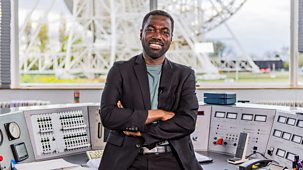
Jodrell Bank: Tuning Into The Universe
It started 80 years ago with a field, army surplus, wartime radar and a visionary idea - and it changed how we see the universe forever. In this episode, we step inside the rema ...
12-05-2026
BBC 4
The Sky At Night
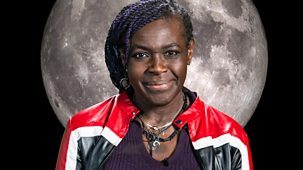
Destination Moon
Maggie Aderin, self-proclaimed lunar-tic, examines Nasa’s Artemis II mission: the first crewed journey towards the moon in more than 50 years. It’s a mission designe ...
14-04-2026
BBC 4
The Sky At Night

Space Mysteries: The Sky At Night Meets Curious Cases
Do aliens exist, and can we talk to them? What does a black hole sound like? Does the universe look like a doughnut? In a spectacular season finale, The Sky at Night teams up wi ...
13-11-2025
BBC 4
The Sky At Night
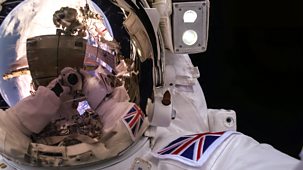
Brits In Space
Three, two, one, lift off! This edition launches into the extraordinary - and extraterrestrial - world of astronaut training, discovering what it truly takes to become a Europea ...
15-10-2025
BBC 4
The Sky At Night
The Expanding Universe
The team explores one of the greatest discoveries of modern astronomy - that our universe is expanding - and the new questions it raises about how the cosmos works.\n\nIn the 19 ...
10-09-2025
BBC 4
The Sky At Night
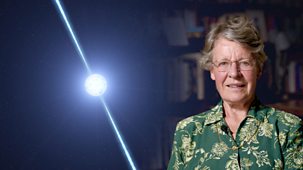
Queen Of Pulsars
Dame Jocelyn Bell Burnell is a discoverer and an explorer of the distant cosmos, and she has walked among the stars. She discovered the first pulsar in 1967 - a discovery so imp ...
14-08-2025
BBC 4
The Sky At Night
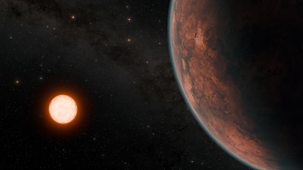
Exoplanets - Strange New Worlds
The team go on a cosmic adventure, exploring one of the newest areas of modern astronomy – the search for exoplanets, the distant bodies that orbit stars beyond our own so ...
16-07-2025
BBC 4
Most popular episodes of The Sky at Night

The Sky At Night
The Aliens Next Door?
Could alien life exist closer than we think - perhaps right next door? A paper published in 2025 suggested that strange markings discovered on Mars could provide some of the str ...
15-07-2026
BBC 4
The Sky At Night
Big Black Holes And Little Red Dots
Professor Brian Cox joins the team to explore one the greatest current mysteries in astronomy - little red dots. Discovered by the James Webb Space Telescope (JWST), they have u ...
11-08-2026
BBC 4
The Sky At Night

Review Of The Year
Chris and Maggie look back at some of the stories they have covered in 2021 in the Sky at Night’s big review of the year.\n\nIn February, three missions arrived at Mars. A ...
16-12-2021
BBC 4
The Sky At Night

Webb Telescope: The Story So Far
In July 2022, the James Webb Space Telescope released its first images. They were visually stunning, and it was clear they provided more detail of stars, galaxies and planets th ...
11-07-2024
BBC 4
The Sky At Night
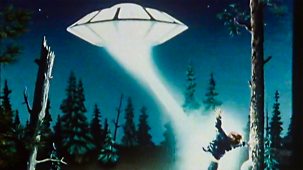
Et And The Bbc
Chris and Maggie dive into the archives to discover how the hunt for extra-terrestrial life in the universe has been reported by the BBC over six decades. Such luminaries as Pat ...
14-07-2021
BBC 4
The Sky At Night

Mars: Red And Dead?
Maggie Aderin-Pocock and Chris Lintott reveal the latest results from Nasa's Curiosity and Esa's ExoMars TGO missions that are attempting to find signs of life on Mars. Maggie v ...
12-04-2018
BBC 4