
Catch up TV


Space Weather: The Perfect Storm
Life on Earth depends on the sun for its light and its warmth. But the activity of our nearest star also poses a serious threat to all of us. In the most extreme cases, solar storms can send billions of tons of supercharged plasma hurtling at millions of miles per hour towards us, crippling our navigation and communication systems and damaging our power grids. In this episode of The Sky at Night, we uncover a danger that humanity is only just waking up to – space weather. \n\nWe begin our journey with the first scientifically recorded instance of extreme space weather. Chris Lintott meets the president of the Royal Astronomical Society, Professor Jim Wild. With privileged access to the society’s archives, Chris learns about the Carrington Event of 1859, when a massive solar storm caused aurorae as far south as the Caribbean and sparks to jump from telegraph wires, setting fires and electrocuting operators. Worryingly, if this were to hit us today, it could be a lot worse...\n\nBut to understand how space weather functions, we need to grasp how the matter spat out by the sun interacts with the Earth. Maggie Aderin drops into Warwick University to discover how Dr Ravindra Desai’s research is helping us do just that. From the magnetosphere, the vast protective bubble generated by our planet’s magnetic core, to the Van Allen Belts – dangerous layers of radiation trapped just above the Earth – Dr Desai is developing next-generation forecasting tools that will help to protect us from future risks.\n\nAt Imperial College London, Chris Lintott gets a peek inside a groundbreaking deep space mission that will revolutionise our ability to monitor the sun’s activity and forecast solar storms. Professor Jonathan Eastwood, the magnetometer instrument lead of Vigil, takes Chris through the satellite’s capabilities. Sat 150 million kms away from Earth, Vigil will monitor the sun’s surface as it rotates towards us, giving us an extra five days’ notice of hazardous activity and a chance to avert a crisis. \n\nIn Exeter, our guest presenter, Sophia Herod, is allowed inside a very special department at the Met Office’s HQ – one of only a handful of 24/7 space weather forecasting operations in the world. There, with the help of space weather expert Krista Hammond, Sophia discovers how the Met Office is keeping a beady eye on the sun, investing in the technologies of the future, and working with government and industry to protect vital infrastructure we all rely on. Ultimately, Sophia reveals that the UK is leading the way on space weather. \n\nAlthough space weather can be scary stuff, we don’t need to live through a disaster movie. This episode tells the amazing story of scientific solutions to vast and intractable problems, and how teams of people dedicate their working lives to keeping us safe from the very worst that the sun can throw at us.
Source: BBC 4
Most recent episodes of The Sky at Night
The Sky At Night
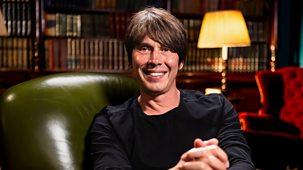
Big Black Holes And Little Red Dots
Professor Brian Cox joins the team to explore one the greatest current mysteries in astronomy - little red dots. Discovered by the James Webb Space Telescope (JWST), they have u ...
11-08-2026
BBC 4

The Sky At Night
The Aliens Next Door?
Could alien life exist closer than we think - perhaps right next door? A paper published in 2025 suggested that strange markings discovered on Mars could provide some of the str ...
15-07-2026
BBC 4
The Sky At Night
Space Weather: The Perfect Storm
Life on Earth depends on the sun for its light and its warmth. But the activity of our nearest star also poses a serious threat to all of us. In the most extreme cases, solar st ...
09-06-2026
BBC 4
The Sky At Night
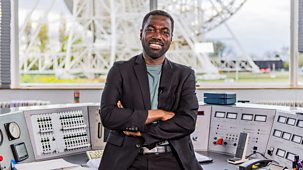
Jodrell Bank: Tuning Into The Universe
It started 80 years ago with a field, army surplus, wartime radar and a visionary idea - and it changed how we see the universe forever. In this episode, we step inside the rema ...
12-05-2026
BBC 4
The Sky At Night
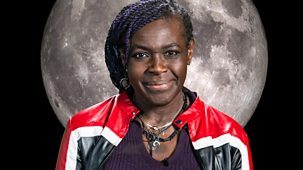
Destination Moon
Maggie Aderin, self-proclaimed lunar-tic, examines Nasa’s Artemis II mission: the first crewed journey towards the moon in more than 50 years. It’s a mission designe ...
14-04-2026
BBC 4
The Sky At Night

Space Mysteries: The Sky At Night Meets Curious Cases
Do aliens exist, and can we talk to them? What does a black hole sound like? Does the universe look like a doughnut? In a spectacular season finale, The Sky at Night teams up wi ...
13-11-2025
BBC 4
The Sky At Night
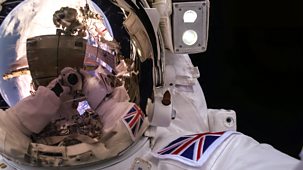
Brits In Space
Three, two, one, lift off! This edition launches into the extraordinary - and extraterrestrial - world of astronaut training, discovering what it truly takes to become a Europea ...
15-10-2025
BBC 4
The Sky At Night

The Expanding Universe
The team explores one of the greatest discoveries of modern astronomy - that our universe is expanding - and the new questions it raises about how the cosmos works.\n\nIn the 19 ...
10-09-2025
BBC 4
The Sky At Night
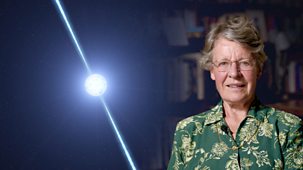
Queen Of Pulsars
Dame Jocelyn Bell Burnell is a discoverer and an explorer of the distant cosmos, and she has walked among the stars. She discovered the first pulsar in 1967 - a discovery so imp ...
14-08-2025
BBC 4
The Sky At Night
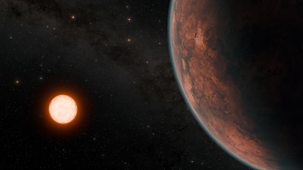
Exoplanets - Strange New Worlds
The team go on a cosmic adventure, exploring one of the newest areas of modern astronomy – the search for exoplanets, the distant bodies that orbit stars beyond our own so ...
16-07-2025
BBC 4
Most popular episodes of The Sky at Night

The Sky At Night
The Aliens Next Door?
Could alien life exist closer than we think - perhaps right next door? A paper published in 2025 suggested that strange markings discovered on Mars could provide some of the str ...
15-07-2026
BBC 4
The Sky At Night
Big Black Holes And Little Red Dots
Professor Brian Cox joins the team to explore one the greatest current mysteries in astronomy - little red dots. Discovered by the James Webb Space Telescope (JWST), they have u ...
11-08-2026
BBC 4
The Sky At Night

Review Of The Year
Chris and Maggie look back at some of the stories they have covered in 2021 in the Sky at Night’s big review of the year.\n\nIn February, three missions arrived at Mars. A ...
16-12-2021
BBC 4
The Sky At Night
Et And The Bbc
Chris and Maggie dive into the archives to discover how the hunt for extra-terrestrial life in the universe has been reported by the BBC over six decades. Such luminaries as Pat ...
14-07-2021
BBC 4
The Sky At Night

Mars: Red And Dead?
Maggie Aderin-Pocock and Chris Lintott reveal the latest results from Nasa's Curiosity and Esa's ExoMars TGO missions that are attempting to find signs of life on Mars. Maggie v ...
12-04-2018
BBC 4
The Sky At Night
The Expanding Universe
The team explores one of the greatest discoveries of modern astronomy - that our universe is expanding - and the new questions it raises about how the cosmos works.\n\nIn the 19 ...
10-09-2025
BBC 4