Catch up TV

The Sky at Day
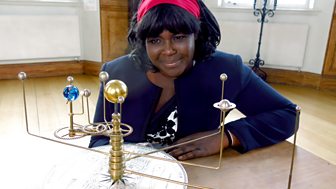
The British weather is often the enemy of stargazers up and down the country. A forecast of a couple of hours of cloud cover will disappoint even the most determined amateur astronomers. In this programme, the Sky at Night becomes the ‘Sky at Day’, providing an alternative range of spectacles to observe and activities to partake in, ideal when the nights are short and the stars are hiding behind the clouds.\n\nThe most obvious spectacle to observe is of course our own star, the sun. A moment is needed to appreciate that whilst amateurs and scientists alike spend lifetimes and whole careers searching for distant stars in the night sky, we have a star on our celestial doorstep that we can actually send a space probe to. In 2018, that is exactly what Nasa did. The idea for the Parker Solar Probe was conceived in 1958, but it took 60 years to develop the technology to make it possible, namely working out how to prevent it from melting. \n\nJustin Kasper, principal investigator for the Sweap instrument (Solar Wind Electrons Alphas and Protons investigation), spoke to Chris about how the probe entered the sun’s atmosphere and made incredible discoveries about its structure. It revealed that the boundary where solar material anchored to the sun first escapes and becomes the solar wind is not a smooth ball but has spikes and valleys that wrinkle the ‘Alfvén critical surface’. Previously, the coronal streamers that cause this wrinkling had been observed from a distance but never measured directly until Sweap came along. Its discoveries are altering what scientists know about the way in which the sun’s atmosphere transforms into the solar wind.\n\nBack on earth, Dr Hannah Wakeford shows us how observing the sun as it rises and sets can tell us a huge amount about the composition of our atmosphere and the weather on the horizon. The adage ‘Red sky at night, shepherd’s delight. Red sky in the morning, shepherd’s warning’ is dismissed as many as an old wives’ tale. However, due to our unique position in the mid-latitudes, it turns out that this saying may be more accurate than many think. Hannah also explores, as light travels from the sun to our eye, how different wavelengths are absorbed and scattered by the atmosphere. The light that completes the journey to our eye or our telescope can reveal the combination of gases that make up the atmosphere. Hannah explains how this process has helped scientists to work out the composition of the atmosphere of other planets in our solar system and even exoplanets orbiting distant stars.\n\nExploring during the day can sometimes unlock a whole new scientific field. Guest presenter George Dransfield spoke to urban micrometeorite hunter Jon Larsen about how he accidentally discovered a micrometeorite on his garden table whilst eating strawberries on a fine summer’s day, and how, ever since, he has been pioneering a method for amateurs across the globe to discover pieces of stardust in their own back garden. George tries to find some micrometeorites of her own, and in the process, learns about the huge spectrum of micrometeorites that Jon, along with his partner Jan Braly Kihle, has found and photographed in astounding detail. \n\nAs well as hunting meteorites and watching the sunset, there is also stargazing to be done during the day. Amateur astronomer and outreach hero Simon Holbeche from Bath spends every sunny weekend showing members of the public the sun in a whole new light. Using different specialist telescopes and heavy solar filters, Simon is able to show passers-by the incredible sunspots on the solar surface and the exploding prominences in the sun’s atmosphere. His enduring hope is that the people he meets might become hooked by what they’ve seen, and one day come back to see the sky at night.
Source: BBC 4
Most recent episodes of The Sky at Night
The Sky At Night
Big Black Holes And Little Red Dots
Professor Brian Cox joins the team to explore one the greatest current mysteries in astronomy - little red dots. Discovered by the James Webb Space Telescope (JWST), they have u ...
11-08-2026
BBC 4

The Sky At Night

The Aliens Next Door?
Could alien life exist closer than we think - perhaps right next door? A paper published in 2025 suggested that strange markings discovered on Mars could provide some of the str ...
15-07-2026
BBC 4
The Sky At Night

Space Weather: The Perfect Storm
Life on Earth depends on the sun for its light and its warmth. But the activity of our nearest star also poses a serious threat to all of us. In the most extreme cases, solar st ...
09-06-2026
BBC 4
The Sky At Night

Jodrell Bank: Tuning Into The Universe
It started 80 years ago with a field, army surplus, wartime radar and a visionary idea - and it changed how we see the universe forever. In this episode, we step inside the rema ...
12-05-2026
BBC 4
The Sky At Night
Destination Moon
Maggie Aderin, self-proclaimed lunar-tic, examines Nasa’s Artemis II mission: the first crewed journey towards the moon in more than 50 years. It’s a mission designe ...
14-04-2026
BBC 4
The Sky At Night

Space Mysteries: The Sky At Night Meets Curious Cases
Do aliens exist, and can we talk to them? What does a black hole sound like? Does the universe look like a doughnut? In a spectacular season finale, The Sky at Night teams up wi ...
13-11-2025
BBC 4
The Sky At Night
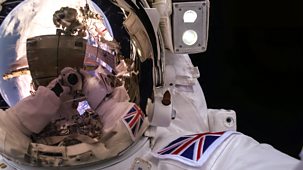
Brits In Space
Three, two, one, lift off! This edition launches into the extraordinary - and extraterrestrial - world of astronaut training, discovering what it truly takes to become a Europea ...
15-10-2025
BBC 4
The Sky At Night

The Expanding Universe
The team explores one of the greatest discoveries of modern astronomy - that our universe is expanding - and the new questions it raises about how the cosmos works.\n\nIn the 19 ...
10-09-2025
BBC 4
The Sky At Night
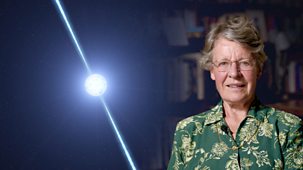
Queen Of Pulsars
Dame Jocelyn Bell Burnell is a discoverer and an explorer of the distant cosmos, and she has walked among the stars. She discovered the first pulsar in 1967 - a discovery so imp ...
14-08-2025
BBC 4
The Sky At Night
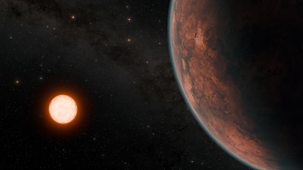
Exoplanets - Strange New Worlds
The team go on a cosmic adventure, exploring one of the newest areas of modern astronomy – the search for exoplanets, the distant bodies that orbit stars beyond our own so ...
16-07-2025
BBC 4
Most popular episodes of The Sky at Night

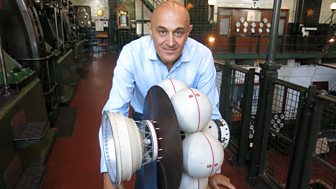
The Sky At Night
The Aliens Next Door?
Could alien life exist closer than we think - perhaps right next door? A paper published in 2025 suggested that strange markings discovered on Mars could provide some of the str ...
15-07-2026
BBC 4
The Sky At Night
Big Black Holes And Little Red Dots
Professor Brian Cox joins the team to explore one the greatest current mysteries in astronomy - little red dots. Discovered by the James Webb Space Telescope (JWST), they have u ...
11-08-2026
BBC 4
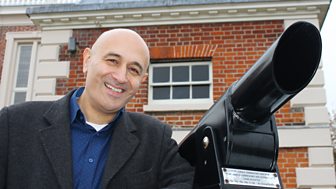
The Sky At Night

Review Of The Year
Chris and Maggie look back at some of the stories they have covered in 2021 in the Sky at Night’s big review of the year.\n\nIn February, three missions arrived at Mars. A ...
16-12-2021
BBC 4
The Sky At Night
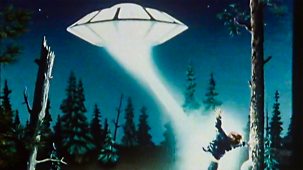
Et And The Bbc
Chris and Maggie dive into the archives to discover how the hunt for extra-terrestrial life in the universe has been reported by the BBC over six decades. Such luminaries as Pat ...
14-07-2021
BBC 4
The Sky At Night
The Expanding Universe
The team explores one of the greatest discoveries of modern astronomy - that our universe is expanding - and the new questions it raises about how the cosmos works.\n\nIn the 19 ...
10-09-2025
BBC 4
The Sky At Night

Ancestral Skies
This month, The Sky at Night teams up with BBC Ideas to discover the secrets of archaeology and astronomy and to reflect on our ancestral skies. \n\nThroughout history and acros ...
14-11-2024
BBC 4