
Catch up TV

The James Webb Road Trip
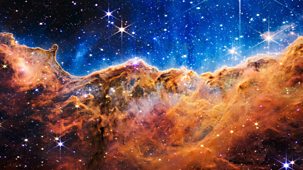
On 12 July 2022, the Sky at Night joined the rest of the world to watch as the James Webb Space Telescope released its long-awaited first images. And it didn’t disappoint. Stars and galaxies were revealed in such detail that they blew even the most experienced astronomers away. However, as spectacular as these images were, it was the data that they represented that really excited the scientists watching.\n\nChris Lintott travels around the country, meeting some of the scientists getting their hands on the very first batches of data coming from the JWST. His first stop is Professor Andy Bunker at the University of Oxford, who is pushing the world’s newest space telescope to its limits to look for some of the first stars and galaxies formed after the Big Bang.\n\nChris also meets Dr Mikako Matsuura of Cardiff University. She is studying the gas structures that dying stars exude as they reach the end of their lives. Mikako explains how the incredible infrared capabilities of the JWST allow her to probe the discs of dust and gas around nebulae and reveal the surprising conditions that form them.\n\nChris then heads on to the University of Bristol to visit Dr Hannah Wakeford, who is incredibly excited by her data, which is revealing previously unknown secrets from the atmospheres of exoplanets orbiting far-flung stars. Hannah’s method of studying exoplanets uses the JWST to measure the light from a target star as an exoplanet ‘transits’ in front of it, briefly and almost imperceptibly dimming it. It is these incredibly precise measurements, only made possible by the sensitivity of this new supertelescope, that she hopes will change what we know about the atmospheric composition of these distant worlds.\n\nFinally, Chris visits Professor Leigh Fletcher at the University of Leicester. Leigh is using the space telescope to look a little closer to home and shows Chris the latest images of Jupiter revealed in a whole new light by the JWST’s infrared data. He explains to Chris the difficulties of capturing large bright objects in the telescope’s small field of view, and what his plans are for studying our solar system’s gas giants. \n\nMeanwhile, Maggie Aderin-Pocock gives a JWST masterclass in the studio. Why is this telescope so revolutionary, and how exactly does it work? She looks at why the JWST is observing light from the infrared part of the electromagnetic spectrum, and also why scientists chose to place the telescope in a location so far from Earth that we could not fix it if something went wrong. Maggie also explores the instruments that call the telescope home and takes a closer look at some of the tricks they have up their sleeves.
Source: BBC 4
Most recent episodes of The Sky at Night
The Sky At Night
Big Black Holes And Little Red Dots
Professor Brian Cox joins the team to explore one the greatest current mysteries in astronomy - little red dots. Discovered by the James Webb Space Telescope (JWST), they have u ...
11-08-2026
BBC 4

The Sky At Night

The Aliens Next Door?
Could alien life exist closer than we think - perhaps right next door? A paper published in 2025 suggested that strange markings discovered on Mars could provide some of the str ...
15-07-2026
BBC 4
The Sky At Night

Space Weather: The Perfect Storm
Life on Earth depends on the sun for its light and its warmth. But the activity of our nearest star also poses a serious threat to all of us. In the most extreme cases, solar st ...
09-06-2026
BBC 4
The Sky At Night
Jodrell Bank: Tuning Into The Universe
It started 80 years ago with a field, army surplus, wartime radar and a visionary idea - and it changed how we see the universe forever. In this episode, we step inside the rema ...
12-05-2026
BBC 4
The Sky At Night
Destination Moon
Maggie Aderin, self-proclaimed lunar-tic, examines Nasa’s Artemis II mission: the first crewed journey towards the moon in more than 50 years. It’s a mission designe ...
14-04-2026
BBC 4
The Sky At Night

Space Mysteries: The Sky At Night Meets Curious Cases
Do aliens exist, and can we talk to them? What does a black hole sound like? Does the universe look like a doughnut? In a spectacular season finale, The Sky at Night teams up wi ...
13-11-2025
BBC 4
The Sky At Night
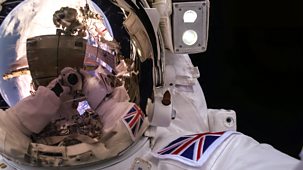
Brits In Space
Three, two, one, lift off! This edition launches into the extraordinary - and extraterrestrial - world of astronaut training, discovering what it truly takes to become a Europea ...
15-10-2025
BBC 4
The Sky At Night

The Expanding Universe
The team explores one of the greatest discoveries of modern astronomy - that our universe is expanding - and the new questions it raises about how the cosmos works.\n\nIn the 19 ...
10-09-2025
BBC 4
The Sky At Night
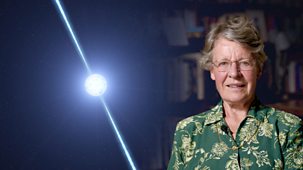
Queen Of Pulsars
Dame Jocelyn Bell Burnell is a discoverer and an explorer of the distant cosmos, and she has walked among the stars. She discovered the first pulsar in 1967 - a discovery so imp ...
14-08-2025
BBC 4
The Sky At Night
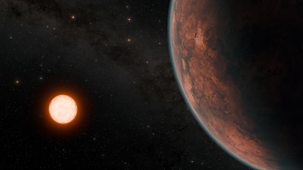
Exoplanets - Strange New Worlds
The team go on a cosmic adventure, exploring one of the newest areas of modern astronomy – the search for exoplanets, the distant bodies that orbit stars beyond our own so ...
16-07-2025
BBC 4
Most popular episodes of The Sky at Night

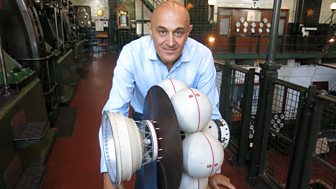
The Sky At Night
The Aliens Next Door?
Could alien life exist closer than we think - perhaps right next door? A paper published in 2025 suggested that strange markings discovered on Mars could provide some of the str ...
15-07-2026
BBC 4
The Sky At Night
Big Black Holes And Little Red Dots
Professor Brian Cox joins the team to explore one the greatest current mysteries in astronomy - little red dots. Discovered by the James Webb Space Telescope (JWST), they have u ...
11-08-2026
BBC 4
The Sky At Night

Webb Telescope: The Story So Far
In July 2022, the James Webb Space Telescope released its first images. They were visually stunning, and it was clear they provided more detail of stars, galaxies and planets th ...
11-07-2024
BBC 4
The Sky At Night
Et And The Bbc
Chris and Maggie dive into the archives to discover how the hunt for extra-terrestrial life in the universe has been reported by the BBC over six decades. Such luminaries as Pat ...
14-07-2021
BBC 4
The Sky At Night

Review Of The Year
Chris and Maggie look back at some of the stories they have covered in 2021 in the Sky at Night’s big review of the year.\n\nIn February, three missions arrived at Mars. A ...
16-12-2021
BBC 4
The Sky At Night
Outback Astronomy
In February 2018, news broke that astronomers had seen the cosmic dawn - the moment when stars first formed, flooding the universe with light. What's remarkable is that this inc ...
12-07-2018
BBC 4
The Sky At Night
Space Boom Britain
Britain’s space industry is booming. According to UK Space Agency, its annual income now stands at £16.4bn, and it employs over 45,000 people. Britain has always bee ...
17-06-2021
BBC 4