Catch up TV

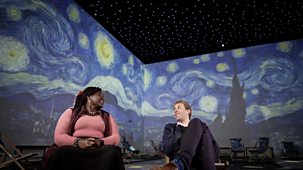
Dark Skies
Dr Maggie Aderin-Pocock and Professor Chris Lintott visit the Van Gogh Immersive Experience to seek inspiration in one of the world’s most famous works of art, Starry Night. How can we mitigate the effects of light pollution so that the beauty of the night sky captured by Van Gogh might be preserved in the real world for future generations?\n\nImages and data from satellites have made it easy for us to visualise the extent of the growing effects of light pollution around the world, but speaking with Professor Kevin Gaston from the University of Exeter, Chris discovers that our current estimates show that global light pollution could be much worse than past data suggests. Without satellites capable of analysing the light emitted from the now-popular bluer LED lighting, he estimates that the true levels of light pollution could be around 200% more than was previously thought. Kevin and Chris discuss how light pollution is not just a problem for astronomers but can have devastating effects on animal behaviour and human health.\n\nPete Lawrence visits one of the few places in the UK where you might still be able to catch a glimpse of the Milky Way. In Moore’s Reserve, named after Sir Patrick Moore, Pete meets up with Dark Skies Officer and South Down National Park ranger Dan Oakley, whose public outreach and passion for astronomy helped to get Dark Sky Reserve status for the area. Together they talk about the way towns and cities might change to help create more dark sky areas for the public to enjoy. \n\nIn contrast, atop Television Centre in London - one of the country’s brightest cities – Chris joins the Baker Street Irregular Astronomers under a bright city night sky. The group demonstrate some tips and tricks to show us that, no matter where you are, you can still view and image some spectacular night sky objects. \n\nAnd finally, Maggie looks at the latest risk to clear views of the night sky, mega-constellations and how satellite streaks that were once a novelty and easy to avoid are now becoming a nuisance to researchers and astronomers in many disciplines. Speaking to Tim Stevenson from the Square Kilometre Array Observatory, they discuss how mega-constellations disrupt radio telescopes that rely on a particular waveband to help their research of everything from galaxy formations and the chemical markers of life in the universe.
Source: BBC 4
Most recent episodes of The Sky at Night
The Sky At Night
Big Black Holes And Little Red Dots
Professor Brian Cox joins the team to explore one the greatest current mysteries in astronomy - little red dots. Discovered by the James Webb Space Telescope (JWST), they have u ...
11-08-2026
BBC 4

The Sky At Night
The Aliens Next Door?
Could alien life exist closer than we think - perhaps right next door? A paper published in 2025 suggested that strange markings discovered on Mars could provide some of the str ...
15-07-2026
BBC 4
The Sky At Night

Space Weather: The Perfect Storm
Life on Earth depends on the sun for its light and its warmth. But the activity of our nearest star also poses a serious threat to all of us. In the most extreme cases, solar st ...
09-06-2026
BBC 4
The Sky At Night
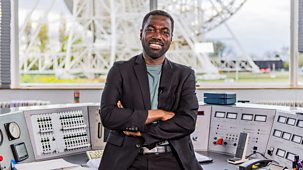
Jodrell Bank: Tuning Into The Universe
It started 80 years ago with a field, army surplus, wartime radar and a visionary idea - and it changed how we see the universe forever. In this episode, we step inside the rema ...
12-05-2026
BBC 4
The Sky At Night
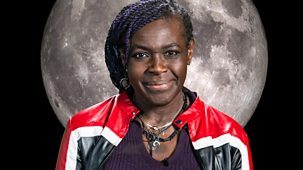
Destination Moon
Maggie Aderin, self-proclaimed lunar-tic, examines Nasa’s Artemis II mission: the first crewed journey towards the moon in more than 50 years. It’s a mission designe ...
14-04-2026
BBC 4
The Sky At Night

Space Mysteries: The Sky At Night Meets Curious Cases
Do aliens exist, and can we talk to them? What does a black hole sound like? Does the universe look like a doughnut? In a spectacular season finale, The Sky at Night teams up wi ...
13-11-2025
BBC 4
The Sky At Night
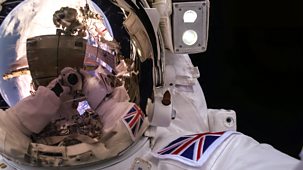
Brits In Space
Three, two, one, lift off! This edition launches into the extraordinary - and extraterrestrial - world of astronaut training, discovering what it truly takes to become a Europea ...
15-10-2025
BBC 4
The Sky At Night

The Expanding Universe
The team explores one of the greatest discoveries of modern astronomy - that our universe is expanding - and the new questions it raises about how the cosmos works.\n\nIn the 19 ...
10-09-2025
BBC 4
The Sky At Night
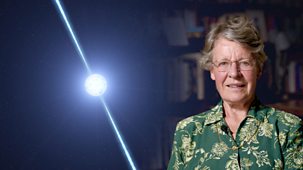
Queen Of Pulsars
Dame Jocelyn Bell Burnell is a discoverer and an explorer of the distant cosmos, and she has walked among the stars. She discovered the first pulsar in 1967 - a discovery so imp ...
14-08-2025
BBC 4
The Sky At Night
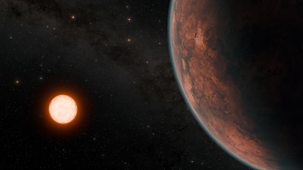
Exoplanets - Strange New Worlds
The team go on a cosmic adventure, exploring one of the newest areas of modern astronomy – the search for exoplanets, the distant bodies that orbit stars beyond our own so ...
16-07-2025
BBC 4
Most popular episodes of The Sky at Night

The Sky At Night
The Aliens Next Door?
Could alien life exist closer than we think - perhaps right next door? A paper published in 2025 suggested that strange markings discovered on Mars could provide some of the str ...
15-07-2026
BBC 4
The Sky At Night
Big Black Holes And Little Red Dots
Professor Brian Cox joins the team to explore one the greatest current mysteries in astronomy - little red dots. Discovered by the James Webb Space Telescope (JWST), they have u ...
11-08-2026
BBC 4
The Sky At Night

Review Of The Year
Chris and Maggie look back at some of the stories they have covered in 2021 in the Sky at Night’s big review of the year.\n\nIn February, three missions arrived at Mars. A ...
16-12-2021
BBC 4
The Sky At Night
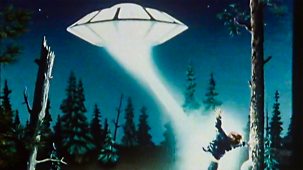
Et And The Bbc
Chris and Maggie dive into the archives to discover how the hunt for extra-terrestrial life in the universe has been reported by the BBC over six decades. Such luminaries as Pat ...
14-07-2021
BBC 4
The Sky At Night
The Expanding Universe
The team explores one of the greatest discoveries of modern astronomy - that our universe is expanding - and the new questions it raises about how the cosmos works.\n\nIn the 19 ...
10-09-2025
BBC 4
The Sky At Night
Ancestral Skies
This month, The Sky at Night teams up with BBC Ideas to discover the secrets of archaeology and astronomy and to reflect on our ancestral skies. \n\nThroughout history and acros ...
14-11-2024
BBC 4