
Catch up TV

Series 9: 5. Hardback Books
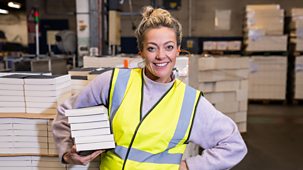
Paddy McGuinness visits the Clays book factory in Suffolk to learn how they produce 20,000 copies of Pride and Prejudice for publisher Penguin. The factory makes an astonishing three million books every week for a variety of publishers, and the process for Paddy’s batch begins at the intake bay, where printing general manager David is overseeing the delivery of massive reels of 1.2-metre-wide paper. Each roll weighs 750 kilograms and will produce 1,380 books. \n\nThe factory is making Penguin's Clothbound Classic of Jane Austen’s Pride and Prejudice - a hardback edition with a beautiful, embossed fabric cover. Paddy is familiar with the love story, in particular that its hero is one Mr Darcy. And if Paddy is tempted by the tall and handsome Darcy role, his Elizabeth Bennett must surely be co-presenter Cherry Healey, who is also at the book factory! So, while Paddy helps to prepare the paper for printing, Cherry learns how the 480 pages of Pride and Prejudice are readied for the press. In a complex process, specialist computer software arranges the text into something called an imposition. The next step is to transfer the imposition onto a large, aluminium, printing plate. Cherry helps to load a blank plate into a specialist machine, which uses a laser to bake the words of the book onto the metal. A total of ten printing plates are produced, which will transfer the ink onto paper in the printing press, forming the 124,713 words of each copy of the book. \n\nBack on the factory floor, Paddy is staggered by the size of the printing press: 18 metres long, six metres tall and weighing 100 tonnes. David tells Paddy that the hi-tech machine is capable of printing 960 pages a second, the equivalent of one copy of Pride and Prejudice every half second!\n\nTo help Paddy understand how the words are being committed to paper inside the massive press, David has set up a little demo. He explains to Paddy that the factory uses a process called lithography, which relies on the science of oil-based ink and water not mixing. \n\nWith words now printed on the paper, the giant 1.2-metre-wide roll is cut into three ribbons and then sent through a machine called a folder. This is where Cherry’s imposition comes into its own. Inside the folder, the ribbons of paper are cut into 55-centimetre-long sheets. These are then placed on top of each other, creating a six-sheet stack, which is then folded in half twice, giving a 24-sheet booklet called a section. And, because the printing press has printed on both sides of the paper, that means a total of 48 pages per section. The booklets exit the machine at a rate of 600 sections a minute. Paddy whips one off the line and flicks through the pages, where he sees they are now magically in numerical order. Once the next nine sections of the classic novel have been printed, Paddy has all the pages he needs to form a complete book. \n\nPaddy heads to the bindery area of the factory, where all ten sections are lined up ready to come together. Each section is pushed down a line onto the top of another, one at a time. The result is ten sections on top of each other and all the pages of the book in order for the first time. Quick as a flash, each and every book then travels through a series of machines which glue ‘end papers’ to the back and front, trim and glue a section of material to the spine and trim the pages. Finally, for the first time, Paddy picks up what looks like a book and is able to flick through the pages. 'There’s just one thing that’s missing,' Paddy says, ‘a cover.’ Dean corrects him. 'Actually, we call them cases'.\n\nLuckily, Cherry is on the case! She’s on the other side of the factory, learning how hard cardboard is glued onto luxurious olive-green cloth, before an intricate brass stamp adds the cover art design and title. Cherry then takes the completed cases to Paddy for the final chapter of the book-making story. \n\nA specialist machine glues Cherry’s cases onto the pages of the books, and the finished novels exit the machine to be admired by Paddy as 'a work of art'. Thirteen and a half hours after production began, Paddy escorts this latest batch of Jane Austen’s classic novel to waiting lorries to be enjoyed by book lovers across the globe. \n\nElsewhere in the episode, Cherry visits an optician to understand how our eyes read the text of a book, exploring the science of sight. And historian Ruth Goodman discovers the extraordinary tale of a young boy called Louis Braille, who helped to transform the lives of people suffering from sight loss.
Source: BBC 2
Most recent episodes of Inside the Factory
Inside The Factory
Series 9: 6. Sausage Rolls
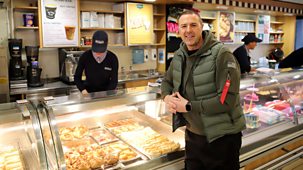
Paddy McGuinness explores the secrets of the McColgan’s bakery in Strabane, Northern Ireland, to reveal how it makes more than half a million sausage rolls a day. \n\nAft ...
23-09-2026
BBC 2

Inside The Factory
Series 9: 5. Hardback Books
Paddy McGuinness visits the Clays book factory in Suffolk to learn how they produce 20,000 copies of Pride and Prejudice for publisher Penguin. The factory makes an astonishing ...
16-09-2026
BBC 2
Inside The Factory
Series 9: 4. Flapjacks
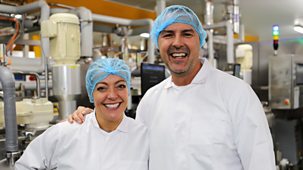
In this episode, Paddy McGuinness explores the secrets of the Graze factory in west London, revealing how they make 40 million flapjacks a year. \n\nArmed with a trusty tasting ...
09-09-2026
BBC 2
Inside The Factory
Series 9: 3. Cheese Curls
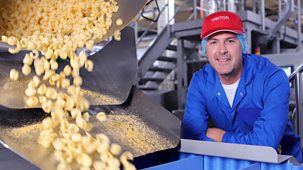
In this episode, Paddy McGuinness explores the secrets of the Walkers factory in Lincoln, to reveal how it makes 500 million packs of Quavers every year. \n\nPaddy begins by mee ...
02-09-2026
BBC 2
Inside The Factory
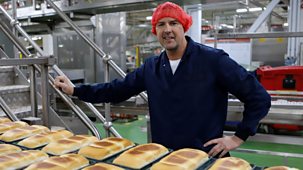
Series 9: 2. Sliced Bread
In a nostalgic episode of Inside the Factory, new presenter Paddy McGuinness visits the Warburtons bread factory in his hometown of Bolton, where he once worked as a youngster m ...
26-08-2026
BBC 2
Inside The Factory
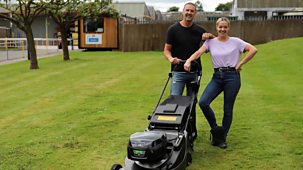
Series 10: Lawnmowers
Paddy McGuinness explores the secrets of Hayter lawnmowers at their factory in Hertfordshire, learning how they produce 15,000 mowers a year. They have been making the machines ...
11-02-2026
BBC 2
Inside The Factory
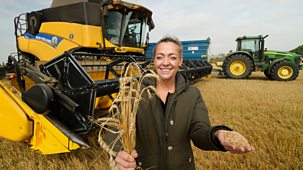
Series 10: Breakfast Cereal
Paddy McGuinness explores the Kellogg’s factory in Wrexham to reveal how it makes 120 million boxes of breakfast cereal a year, inside a huge factory covering an area bigg ...
03-02-2026
BBC 2
Inside The Factory
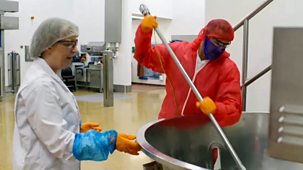
Series 10: Throat Lozenges
Paddy McGuinness explores the secrets of the Reckitt medicine factory in Nottingham to reveal how it makes 230 million tablets and lozenges every single week. Paddy is following ...
27-01-2026
BBC 2
Inside The Factory
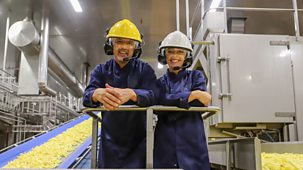
Series 10: Oven Chips
Paddy McGuinness explores the secrets of the McCain factory near Scarborough to reveal how it cuts, fries and freezes 80 million chips a day. Today, he’s following product ...
21-01-2026
BBC 2
Inside The Factory
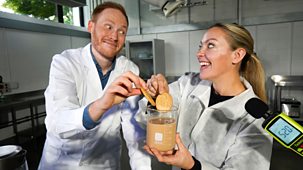
Series 10: Jammy Biscuits
Paddy McGuinness explores the secrets of the Jammie Dodgers factory in south Wales, revealing how they produce a whopping 4.4 billion biscuits a year. \n\nIn this episode, Paddy ...
14-01-2026
BBC 2
Most popular episodes of Inside the Factory
Inside The Factory
Series 10: Oven Chips
Paddy McGuinness explores the secrets of the McCain factory near Scarborough to reveal how it cuts, fries and freezes 80 million chips a day. Today, he’s following product ...
21-01-2026
BBC 2
Inside The Factory
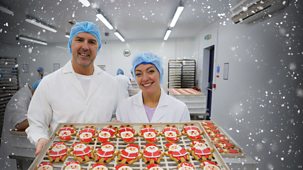
Series 10: Gingerbread
Paddy McGuinness explores the secrets of the Original Biscuit Bakers factory in Shropshire to reveal how it makes 100,000 festive gingerbread figures every week in the run-up to ...
01-01-2026
BBC 2
Inside The Factory
Series 9: 4. Flapjacks
In this episode, Paddy McGuinness explores the secrets of the Graze factory in west London, revealing how they make 40 million flapjacks a year. \n\nArmed with a trusty tasting ...
09-09-2026
BBC 2
Inside The Factory
Series 10: Breakfast Cereal
Paddy McGuinness explores the Kellogg’s factory in Wrexham to reveal how it makes 120 million boxes of breakfast cereal a year, inside a huge factory covering an area bigg ...
03-02-2026
BBC 2
Inside The Factory
Series 9: 6. Sausage Rolls
Paddy McGuinness explores the secrets of the McColgan’s bakery in Strabane, Northern Ireland, to reveal how it makes more than half a million sausage rolls a day. \n\nAft ...
23-09-2026
BBC 2
Inside The Factory
Series 9: 3. Cheese Curls
In this episode, Paddy McGuinness explores the secrets of the Walkers factory in Lincoln, to reveal how it makes 500 million packs of Quavers every year. \n\nPaddy begins by mee ...
02-09-2026
BBC 2
Inside The Factory
Series 9: 2. Sliced Bread
In a nostalgic episode of Inside the Factory, new presenter Paddy McGuinness visits the Warburtons bread factory in his hometown of Bolton, where he once worked as a youngster m ...
26-08-2026
BBC 2
Inside The Factory
Series 10: Jammy Biscuits
Paddy McGuinness explores the secrets of the Jammie Dodgers factory in south Wales, revealing how they produce a whopping 4.4 billion biscuits a year. \n\nIn this episode, Paddy ...
14-01-2026
BBC 2
Inside The Factory
Series 10: Throat Lozenges
Paddy McGuinness explores the secrets of the Reckitt medicine factory in Nottingham to reveal how it makes 230 million tablets and lozenges every single week. Paddy is following ...
27-01-2026
BBC 2
Inside The Factory
Series 9: 5. Hardback Books
Paddy McGuinness visits the Clays book factory in Suffolk to learn how they produce 20,000 copies of Pride and Prejudice for publisher Penguin. The factory makes an astonishing ...
16-09-2026
BBC 2