
Catch up TV

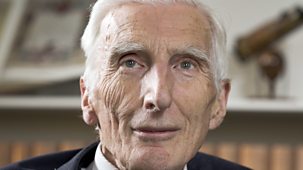
The Astronomer Royal at 80
Martin Rees is perhaps Britain’s most renowned cosmologist. He was master of Trinity College, Cambridge, president of both the Royal Astronomical Society and the Institute of Physics, and has led the nation’s foremost science institution, the Royal Society. Now, about to celebrate his eightieth birthday, Lord Rees talks to Chris Lintott about his career in science. \n\nLord Rees says he wasn’t particularly interested in the night sky as a child and only pursued science at school because he found languages difficult. He also regretted reading maths at Cambridge, only finding his stride during his postgraduate studies, when he was taken on by Dennis Sciama to undertake research in astrophysics, leading to his PhD. \n\nRees’s career spans what he calls a ‘golden age’ for astronomy. It began during a time when the origin of the universe was debated, when the flamboyant Fred Hoyle’s ‘steady state’ theory was eventually put to the sword by the bookish Martin Ryle, using the new technology of radio astronomy – in part aided and abetted by a young Martin Rees, whose work on quasars helped deal the fatal blow. \n\nRees was a contemporary of Stephen Hawking and witnessed at first hand the excitement of seeing black holes elevated from a speculative concept to an integral part of our universe’s evolution. Like many advances, including radio astronomy, it happened thanks to accidents in simultaneous progress. Work on radar during WWII led to advances in seeing the universe in non-visible wavelengths. Though they had been postulated in the 19th century, the reality of black holes arrived via Einstein’s theory of relativity, combined with radio astronomy and Roger Penrose’s genius for maths. \n\nTime and again, over Rees’s career, seemingly bizarre ideas in cosmology have turned out to have merit. Rees and his colleagues showed that ‘dark matter’ – a speculative ‘fix’ for inconsistencies in galaxy dynamics – is also essential to the understanding of how the early universe found form, giving the concept increased credibility. \n\nOne of science’s most celebrated thinkers and writers, Rees has never been shy of engaging with difficult concepts. While the ‘big bang’ solved the question of our origin story, it also raises other questions such as ‘what was there before the big bang?’, and Rees enjoys considering the possibility that there are other universes, perhaps with the properties of our universe that gave rise to us, or perhaps wholly or partially different. \n\nLord Rees also discusses the search for extraterrestrial intelligence, noting that while complex life may arise or has arisen in the universe, the likelihood is that, given the massive timescales involved, we are almost guaranteed to co-exist. But this leads to the intriguing prospect that any intelligent civilisation, including our own, is likely to create artificial intelligences that will supersede us and may well be near-immortal. \n\nWhile Lord Rees worries about the threats that AI and the misuse of technology poses to our civilisation, he sees a potentially bright future in terms of scientific discovery, citing international collaborations and technological advances that might see us answering some of the questions we consider today to be too difficult - like the start of the universe and black holes used to be not so long ago.
Source: BBC 4
Most recent episodes of The Sky at Night
The Sky At Night

Engineering The Universe
Chris Lintott and the team explore the extraordinary engineering, both on Earth and millions of kilometres above it in space, that is transforming modern astronomy and revealing ...
15-09-2026
BBC 4

The Sky At Night
Big Black Holes And Little Red Dots
Professor Brian Cox joins the team to explore one the greatest current mysteries in astronomy - little red dots. Discovered by the James Webb Space Telescope (JWST), they have u ...
11-08-2026
BBC 4
The Sky At Night

The Aliens Next Door?
Could alien life exist closer than we think - perhaps right next door? A paper published in 2025 suggested that strange markings discovered on Mars could provide some of the str ...
15-07-2026
BBC 4
The Sky At Night

Space Weather: The Perfect Storm
Life on Earth depends on the sun for its light and its warmth. But the activity of our nearest star also poses a serious threat to all of us. In the most extreme cases, solar st ...
09-06-2026
BBC 4
The Sky At Night
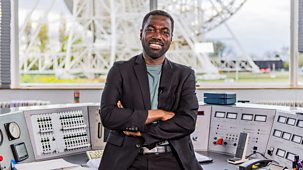
Jodrell Bank: Tuning Into The Universe
It started 80 years ago with a field, army surplus, wartime radar and a visionary idea - and it changed how we see the universe forever. In this episode, we step inside the rema ...
12-05-2026
BBC 4
The Sky At Night
Destination Moon
Maggie Aderin, self-proclaimed lunar-tic, examines Nasa’s Artemis II mission: the first crewed journey towards the moon in more than 50 years. It’s a mission designe ...
14-04-2026
BBC 4
The Sky At Night

Space Mysteries: The Sky At Night Meets Curious Cases
Do aliens exist, and can we talk to them? What does a black hole sound like? Does the universe look like a doughnut? In a spectacular season finale, The Sky at Night teams up wi ...
13-11-2025
BBC 4
The Sky At Night
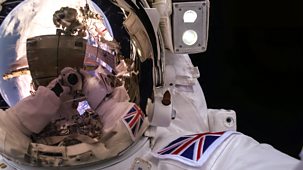
Brits In Space
Three, two, one, lift off! This edition launches into the extraordinary - and extraterrestrial - world of astronaut training, discovering what it truly takes to become a Europea ...
15-10-2025
BBC 4
The Sky At Night

The Expanding Universe
The team explores one of the greatest discoveries of modern astronomy - that our universe is expanding - and the new questions it raises about how the cosmos works.\n\nIn the 19 ...
10-09-2025
BBC 4
The Sky At Night
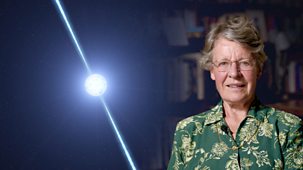
Queen Of Pulsars
Dame Jocelyn Bell Burnell is a discoverer and an explorer of the distant cosmos, and she has walked among the stars. She discovered the first pulsar in 1967 - a discovery so imp ...
14-08-2025
BBC 4
Most popular episodes of The Sky at Night
The Sky At Night
Engineering The Universe
Chris Lintott and the team explore the extraordinary engineering, both on Earth and millions of kilometres above it in space, that is transforming modern astronomy and revealing ...
15-09-2026
BBC 4
The Sky At Night
Big Black Holes And Little Red Dots
Professor Brian Cox joins the team to explore one the greatest current mysteries in astronomy - little red dots. Discovered by the James Webb Space Telescope (JWST), they have u ...
11-08-2026
BBC 4
The Sky At Night

Webb Telescope: The Story So Far
In July 2022, the James Webb Space Telescope released its first images. They were visually stunning, and it was clear they provided more detail of stars, galaxies and planets th ...
11-07-2024
BBC 4

The Sky At Night
The Aliens Next Door?
Could alien life exist closer than we think - perhaps right next door? A paper published in 2025 suggested that strange markings discovered on Mars could provide some of the str ...
15-07-2026
BBC 4
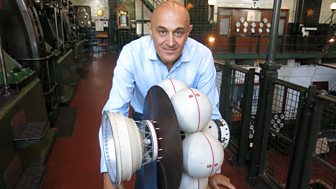
The Sky At Night

The Search For Alien Life
The Sky at Night team investigate the latest science in the hunt for extraterrestrial life. Scientists have never been more obsessed with finding aliens than they are right now. ...
13-04-2023
BBC 4
The Sky At Night
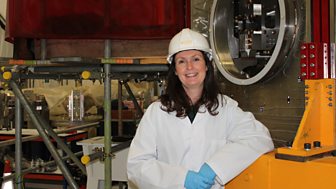
Cosmic Blasts
The Sky at Night team look at cosmic explosions. They explore the beautiful but potentially deadly outbursts of our very own star - the sun - and the most violent and energetic ...
09-08-2015
BBC 4
The Sky At Night
Guides: 1. Planets
The planets have fascinated us for millennia, but over the past 60 years our understanding of them has been transformed. Using The Sky at Night archives, Maggie Aderin-Pocock ta ...
17-05-2018
BBC 4