
Catch up TV

Series 6: 10. Vacuums
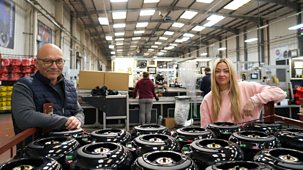
Gregg Wallace visits a huge vacuum cleaner factory in the heart of Somerset. This 32-acre site is a hive of activity where 1.2 million vacuums are made every year. Gregg is following their biggest seller, the Henry vacuum cleaner in bright red.\n\nHe starts with head of operations Stuart Cochrane, who is taking delivery of 25 tonnes of clear polypropylene pellets. They are transported to the factory floor via a spaghetti junction of pipes and then mixed with a red colouring agent. A massive moulding machine heats the plastic pellets and forces them into a drum-shaped mould under 300 tonnes of clamp pressure, the equivalent weight of 24 London buses. There are 47 of these huge moulding machines in the factory, churning out a total of 5,000 vacuums every day.\n\nNext, Gregg’s vacuum needs a bit of personality. The famous smile was drawn on for the first time as a joke by an employee at a trade show, but it attracted so much attention that it quickly became a permanent fixture. It is created using a process called PAD printing. Silicone pads are dipped in ink and pressed onto the surface of the moulded plastic ‘face’ to create the eyes and smile, after which it is cured under heat to dry the ink.\n \nWith the drum and face moulded and printed, and wheels made from moulded recycled plastic, the bottom half of the vacuum is assembled in less than a minute. Timing is crucial - the drum is still hot from the moulding machine, so the wheels must be slotted in before the plastic cools and shrinks. \n\nNow for the top half of the vacuum cleaner, which starts with a moulded motor housing. The motor needs power, so Gregg meets with wiring section manager Nathan Bandy at the loom assembly station. Nathan explains that the wiring loom is a cluster of cables that connect to the on/off switch, transmitting electricity to the motor. \n\nWith so many electrical and mechanical parts in each vacuum, the factory has its own on-site testing centre. Gregg can’t quite believe his eyes, as everywhere he looks, they are being put through their paces. It is like a torture chamber for vacuum cleaners! \n\nBack at the factory, the top half of Gregg’s vacuum is coming together, and the shiny top cover is emerging from another moulding machine. \n\nNext, Gregg is sent off in search of a set of ‘wands’ for his vacuum, and project manager Roy Poole has the magic touch. The wands start life as 422mm stainless steel tubes which are fed into a machine that reduces one end by 1mm and stretches the other by 1.75, so they will slot neatly together to form a solid link between the brushes and the hose. \n\nAt last, the components can be brought together at the final assembly station, and it happens fast! The lower housing forms the base, then the motor with a jacket of acoustic wrap. The upper motor housing drops in on top with the reeler and ten-metre-long cable coming in above, before it is all finished off with the shiny cover. The machine is plugged in and powered up to check the suction reaches a precise 225 millibar. Gregg is stunned to see that all the components come together in less than 30 seconds, before they’re checked, boxed up and sent to the dispatch area. \n\nThe storage and distribution centre is 21,000 square feet, the size of nine tennis courts, and from there, the boxes of vacuums roll down a clever chute to one of the ten trucks that leave the factory every day, each carrying nearly 1,000 machines.
Source: BBC 2
Most recent episodes of Inside the Factory
Inside The Factory
Series 9: 4. Flapjacks
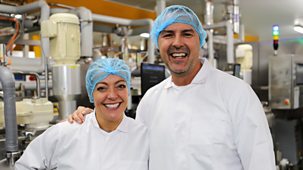
In this episode, Paddy McGuinness explores the secrets of the Graze factory in west London, revealing how they make 40 million flapjacks a year. \n\nArmed with a trusty tasting ...
09-09-2026
BBC 2

Inside The Factory
Series 9: 3. Cheese Curls
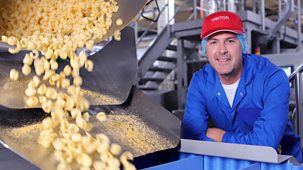
In this episode, Paddy McGuinness explores the secrets of the Walkers factory in Lincoln, to reveal how it makes 500 million packs of Quavers every year. \n\nPaddy begins by mee ...
02-09-2026
BBC 2
Inside The Factory
Series 9: 2. Sliced Bread
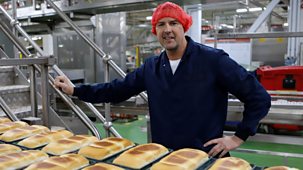
In a nostalgic episode of Inside the Factory, new presenter Paddy McGuinness visits the Warburtons bread factory in his hometown of Bolton, where he once worked as a youngster m ...
26-08-2026
BBC 2
Inside The Factory
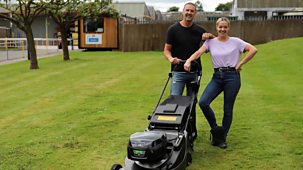
Series 10: Lawnmowers
Paddy McGuinness explores the secrets of Hayter lawnmowers at their factory in Hertfordshire, learning how they produce 15,000 mowers a year. They have been making the machines ...
11-02-2026
BBC 2
Inside The Factory

Series 10: Breakfast Cereal
Paddy McGuinness explores the Kellogg’s factory in Wrexham to reveal how it makes 120 million boxes of breakfast cereal a year, inside a huge factory covering an area bigg ...
03-02-2026
BBC 2
Inside The Factory
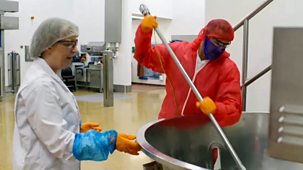
Series 10: Throat Lozenges
Paddy McGuinness explores the secrets of the Reckitt medicine factory in Nottingham to reveal how it makes 230 million tablets and lozenges every single week. Paddy is following ...
27-01-2026
BBC 2
Inside The Factory
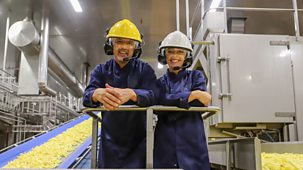
Series 10: Oven Chips
Paddy McGuinness explores the secrets of the McCain factory near Scarborough to reveal how it cuts, fries and freezes 80 million chips a day. Today, he’s following product ...
21-01-2026
BBC 2
Inside The Factory
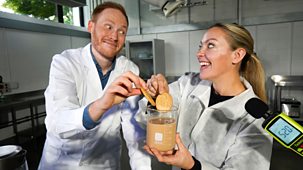
Series 10: Jammy Biscuits
Paddy McGuinness explores the secrets of the Jammie Dodgers factory in south Wales, revealing how they produce a whopping 4.4 billion biscuits a year. \n\nIn this episode, Paddy ...
14-01-2026
BBC 2
Inside The Factory
Series 10: Gingerbread
Paddy McGuinness explores the secrets of the Original Biscuit Bakers factory in Shropshire to reveal how it makes 100,000 festive gingerbread figures every week in the run-up to ...
01-01-2026
BBC 2
Inside The Factory
Series 9: 1. Chocolate Seashells
Paddy McGuinness is fully immersing himself in the festive spirit as he explores a huge chocolate factory in Belgium. With lots of taste tests to enjoy along the way, he embrace ...
13-12-2025
BBC 2
Most popular episodes of Inside the Factory
Inside The Factory
Series 10: Oven Chips
Paddy McGuinness explores the secrets of the McCain factory near Scarborough to reveal how it cuts, fries and freezes 80 million chips a day. Today, he’s following product ...
21-01-2026
BBC 2
Inside The Factory
Series 10: Gingerbread
Paddy McGuinness explores the secrets of the Original Biscuit Bakers factory in Shropshire to reveal how it makes 100,000 festive gingerbread figures every week in the run-up to ...
01-01-2026
BBC 2
Inside The Factory
Series 10: Breakfast Cereal
Paddy McGuinness explores the Kellogg’s factory in Wrexham to reveal how it makes 120 million boxes of breakfast cereal a year, inside a huge factory covering an area bigg ...
03-02-2026
BBC 2
Inside The Factory
Series 9: 3. Cheese Curls
In this episode, Paddy McGuinness explores the secrets of the Walkers factory in Lincoln, to reveal how it makes 500 million packs of Quavers every year. \n\nPaddy begins by mee ...
02-09-2026
BBC 2
Inside The Factory
Series 5: 6. Pizza
Gregg Wallace is in Italy, at an enormous pizza factory where they produce 400,000 frozen pizzas each day. He mixes up a 450 kilo batch of dough for the bases; enough for 180 00 ...
02-04-2019
BBC 2
Inside The Factory
Series 9: 6. Sausage Rolls
Paddy McGuinness explores the secrets of the McColgan’s bakery in Strabane, Northern Ireland, to reveal how it makes more than half a million sausage rolls a day. \n\nAft ...
09-02-2025
BBC 2
Inside The Factory
Series 6: 10. Vacuums
Gregg Wallace visits a huge vacuum cleaner factory in the heart of Somerset. This 32-acre site is a hive of activity where 1.2 million vacuums are made every year. Gregg is foll ...
17-08-2023
BBC 2
Inside The Factory
Series 9: 2. Sliced Bread
In a nostalgic episode of Inside the Factory, new presenter Paddy McGuinness visits the Warburtons bread factory in his hometown of Bolton, where he once worked as a youngster m ...
26-08-2026
BBC 2
Inside The Factory
Series 9: 4. Flapjacks
In this episode, Paddy McGuinness explores the secrets of the Graze factory in west London, revealing how they make 40 million flapjacks a year. \n\nArmed with a trusty tasting ...
09-09-2026
BBC 2
Inside The Factory
Series 10: Jammy Biscuits
Paddy McGuinness explores the secrets of the Jammie Dodgers factory in south Wales, revealing how they produce a whopping 4.4 billion biscuits a year. \n\nIn this episode, Paddy ...
14-01-2026
BBC 2