
Catch up TV


Series 14: 1. Fabergé or Fauxbergé
Did a delicate enamel Fabergé lily really find its way from Tsarist Russia to a shoebox in Liverpool? Fiona Bruce and Philip Mould are on the case, examining this mysterious flower belonging to sales assistant Rachael. \n\nThe House of Fabergé was one of the most celebrated luxury jewellers in history – a symbol of Imperial Russia’s splendour and artistry. Led by master craftsman Peter Carl Fabergé, it created objects of beauty and ingenuity, famously the dazzling Imperial Easter eggs made for the Tsars. Fabergé flowers were equally exquisite, exchanged among members of the Russian royal family, and the extended royal families of Europe, as tokens of affection.\n\nHow appropriate for our story. Because this piece isn’t just potentially life-changing for Rachael. It carries a powerful emotional story. Namely, that it was inherited from a much-loved step-grandmother, whose life held unexpected friendship ties to royalty.\n\nBut with no official authority behind Fabergé, the power to judge its authenticity falls to auction houses and specialists. Many fakes have been sold in the past for vast amounts. So, when provenance in Russia proves elusive, can scientific breakthroughs, ingenious connections and sharp historical detective work prove Rachael’s flower’s worth? Or will it just uncover a masterful forgery?\n\nThe distinctive object in question is a delicate enamel flower, identified as a Martagon lily, native to eastern Europe. Its deep red enamel bloom and vivid green leaves are perched on top of a slender enamelled gold stem supported by a hidden steel rod to hold it upright and placed inside what appears to be a rock crystal water-filled vase. The piece is believed to have been gifted to Rachael’s step-grandmother Mary by one of the royal family members she was friends with. Could it have been Helen, Queen Mother of Romania – a passionate Fabergé collector who had both a personal and professional connection to the family through Rachael’s grandfather Austin’s work as a solicitor? \n\nCertainly, when Mary was alive, an auction house deemed it genuine, valuing it at hundreds of thousands of pounds. However, when Rachael inherited the piece, that assessment changed. The auction house downgraded it, no longer convinced it was Fabergé at all. But Mary always believed it to be genuine, and Rachael holds on to that conviction, certain it is a true Fabergé creation.\n\nFiona and Philip will need to trace royal family connections from eastern Europe to Liverpool. The steps they need to take are simple – but getting there is not! \n\nFiona endeavours to uncover ledgers and documents deep in the Russian archives and speak to specialists from across the globe who can reveal more details on the royal families of Yugoslavia, Denmark and Romania. And above all, together with Rachael, she delves into a vast array of exciting family archives, full of letters and photos that reflect the ties of love, loyalty and friendship between Rachael’s grandparents and royal families, including our own Queen Elizabeth and Queen Alexandra of Yugoslavia.\n\nMeanwhile, Philip consults renowned expert Geoffrey Munn, who has handled many Fabergé flowers in his lifetime and even valued one at an extraordinary one million pounds. From there, he investigates the physical properties of Fabergé flowers, spotting connections in the craftsmanship of the enamel, the gold and the crystal, and looking across a century of knowledge of how these flowers were created with experts such as Helen Molesworth of the V&A. \n\nIf this is a genuine Fabergé flower, then it could be worth upwards of a quarter-of-a-million pounds. But when no two Fabergé flowers are the same and no box can be found, will all this work be enough to convince the auction houses?
Source: BBC 1
Most recent episodes of Fake or Fortune?
Fake Or Fortune?
Series 14: 2. A Passage To India
Two women lost in time: an enigmatic Indian woman and an 18th-century Scottish artist, both of whom, only now, are being rediscovered. \n\nFiona Bruce and Philip Mould embark on ...
06-09-2026
BBC 1

Fake Or Fortune?
Series 14 : 6. What Happened Next? John Lennon's Piano
Fiona Bruce and Philip Mould revisit the fast-growing market for rock music memorabilia. Armed with fresh research and new theories, they once again set out to get to the bottom ...
30-08-2026
BBC 1
Fake Or Fortune?
Series 14 : 5. What Happened Next? Toulouse-lautrec
Art detectives Fiona Bruce and Philip Mould revisit a story from Series 7, investigating two charming sketchbooks believed to be by Henri de Toulouse-Lautrec. Did owner Alain Br ...
23-08-2026
BBC 1
Fake Or Fortune?

Series 14: 4. Freud Or Fraud?
Art detectives Fiona Bruce and Philip Mould head to Somerset, where 15 unsigned prints of Lucian Freud’s etching Girl with Fig Leaf have been discovered in a garage. Will ...
08-08-2026
BBC 1
Fake Or Fortune?
Series 14: 3. The Last Gift
A French setting, a 20th-century artistic trailblazer, a tale of endurance and generosity – and a potentially huge price tag. \n\nArt sleuths Fiona Bruce and Philip Mould ...
01-08-2026
BBC 1
Fake Or Fortune?
Series 14: 1. Fabergé Or Fauxbergé
Did a delicate enamel Fabergé lily really find its way from Tsarist Russia to a shoebox in Liverpool? Fiona Bruce and Philip Mould are on the case, examining this mysteri ...
19-07-2026
BBC 1
Fake Or Fortune?
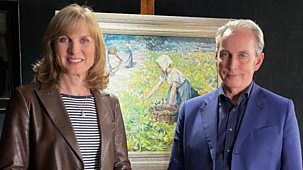
Series 12: 2. Helen Mcnicoll
Could a beautiful painting of women working in a field be a valuable lost work by Helen McNicoll, a celebrated impressionist artist from Canada? The quest to prove it takes the ...
22-10-2025
BBC 1
Fake Or Fortune?

Series 12: 1. Mondrian
Fiona Bruce and Philip Mould investigate a charming little white flower picture, purported to be by one of the most important abstract artists of the 20th century, Piet Mondrian ...
15-10-2025
BBC 1
Fake Or Fortune?

Series 13: 6. What Happened Next? Helen Mcnicoll
Fiona Bruce and Philip Mould return to the story of a beautiful painting by Canadian impressionist Helen McNicoll and find out what happens when owner David decides to offer the ...
01-09-2025
BBC 1
Fake Or Fortune?
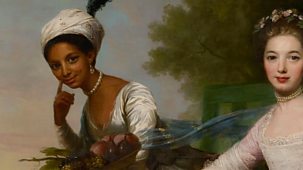
Series 13: 5. What Happened Next? A Double Whodunnit
Fiona Bruce and Philip Mould revisit their 2017 investigation into two rare portraits of Black British women from the 18th and 19th centuries. Huge cultural shifts have happened ...
24-08-2025
BBC 1
Most popular episodes of Fake or Fortune?
Fake Or Fortune?
Series 14: 1. Fabergé Or Fauxbergé
Did a delicate enamel Fabergé lily really find its way from Tsarist Russia to a shoebox in Liverpool? Fiona Bruce and Philip Mould are on the case, examining this mysteri ...
19-07-2026
BBC 1
Fake Or Fortune?
Series 11: 4. Arshile Gorky
Fiona Bruce and Philip Mould investigate a murky canvas that could be by Arshile Gorky, a pioneer of abstract expressionism. Works by this Armenian-American artist fetch million ...
28-08-2024
BBC 1
Fake Or Fortune?
Series 13: 1. The Mystery Of Churchill’s Garden
A mysterious inscription, a famous name and a colossal price tag. Fiona Bruce and Philip Mould embark on a high-stakes quest to authenticate a 'lost' painting believed to be the ...
31-07-2025
BBC 1
Fake Or Fortune?

Series 12: 3. Music Memorabilia
The team take on an entertaining new challenge when they plunge into the fast-growing market for rock music memorabilia. Can they prove that a curious silver guitar once belonge ...
09-01-2025
BBC 1
Fake Or Fortune?
Series 14: 4. Freud Or Fraud?
Art detectives Fiona Bruce and Philip Mould head to Somerset, where 15 unsigned prints of Lucian Freud’s etching Girl with Fig Leaf have been discovered in a garage. Will ...
08-08-2026
BBC 1
Fake Or Fortune?
Series 14 : 6. What Happened Next? John Lennon's Piano
Fiona Bruce and Philip Mould revisit the fast-growing market for rock music memorabilia. Armed with fresh research and new theories, they once again set out to get to the bottom ...
30-08-2026
BBC 1
Fake Or Fortune?

Series 13: 4. Portrait Of A Lady - In Pittsburgh?
In the suburbs of Pittsburgh, Fiona Bruce meets Laura and Pat, who purchased a painting of a young woman grieving over a funerary urn. It cost $200 from an estate auction, and i ...
21-08-2025
BBC 1
Fake Or Fortune?
Series 14 : 5. What Happened Next? Toulouse-lautrec
Art detectives Fiona Bruce and Philip Mould revisit a story from Series 7, investigating two charming sketchbooks believed to be by Henri de Toulouse-Lautrec. Did owner Alain Br ...
23-08-2026
BBC 1
Fake Or Fortune?
Series 14: 3. The Last Gift
A French setting, a 20th-century artistic trailblazer, a tale of endurance and generosity – and a potentially huge price tag. \n\nArt sleuths Fiona Bruce and Philip Mould ...
01-08-2026
BBC 1
Fake Or Fortune?
Series 13: 5. What Happened Next? A Double Whodunnit
Fiona Bruce and Philip Mould revisit their 2017 investigation into two rare portraits of Black British women from the 18th and 19th centuries. Huge cultural shifts have happened ...
24-08-2025
BBC 1