
Catch up TV

Series 9: 3. Cheese Curls
In this episode, Paddy McGuinness explores the secrets of the Walkers factory in Lincoln, to reveal how it makes 500 million packs of Quavers every year. \n\nPaddy begins by meeting factory manager Layla Whiting, who reveals that, despite popular belief, cheese curls aren’t officially classed as crisps! In fact, while crisps are made from sliced potatoes, Quavers are made from the potato starch powder left behind during the crisp-making process. Their first stop is a huge mixer where the starch powder is added, along with equally fine rice and soya flours. Then they add some mild seasoning of salt, pepper, onion powder and yeast - but no cheese flavour yet. The whole lot is mixed with water to create a dough. \n\nThis is a huge and very hot factory! Comparing it to getting off a plane on holiday, Paddy exclaims, ‘this is like landing on the sun!’ But he soldiers on to the next stage of production. After mixing, the dough is forced under very high pressure through an extruder, emerging as a continuous one-millimetre-thick sheet. It looks more like a lasagne sheet at this stage and the process is nothing like Paddy imagined it would be. \n\nTo ensure every one of the snacks ends up with the famous curly shape, the dough is stretched over rollers to add tension. Then it travels through an 18-metre-long steamer, increasing the moisture level in the dough to 40%, making it more pliable and stretchy. After being quickly cooled, the continuous sheet of dough is sent rushing through a machine which chops it into 13 millimetre by 40 millimetre pellets, at a rate of 7,900 a minute. But the pellets contain too much moisture, so they are sent through a series of dryers, bringing the moisture content down to 11%. \n\nOver in the frying area, Paddy learns how 1.2 tonnes of pellets travel through a specialist fryer every hour. Inside the fryer, the pellets are plunged into sunflower oil heated to 200 degrees Celsius. The heat of the oil causes any remaining water inside to turn to steam, puffing them and leaving tiny air holes. At the same time, the tension created when the dough was stretched now contracts and curls up. After 20 seconds in the oil, 1.8 million perfectly formed curls cascade out of the fryer every hour. Finally, Paddy is able to see the curly snack he knows. There is one vital thing missing from the snacks though – cheese flavouring. To put that right, each one of the freshly cooked curls travels through a huge metal drum where a precise amount of cheese powder flavouring is applied. \n\nAfter a welcome taste test, Paddy follows his snacks, still warm off the production line, to the packing department. First, a specialist machine called a multi-head weigher carefully portions out 16 grams of cheese curls before another machine seals them neatly into aluminium and plastic packets. Then, each packet is sent hurtling towards a robot which sorts them into groups of six, before they are packed into multipack bags. \n\nFinally, the multipacks are put into boxes and placed on pallets before making their way to the dispatch area. There, Paddy learns how 93,600 packets are loaded onto each waiting lorry, before being sent to shops and supermarkets across the country. \n\nEarlier in the episode, Cherry visits a Walkers crisp factory to learn how the starch from potato crisp production is transformed into the potato starch powder used to make the cheese curls. And she visits another factory in Leicester to find out how ten million bags of Bombay Mix are produced every year. \n\nMeanwhile, historian Ruth Goodman learns how a group of American military scientists invented cheese flavouring during the Second World War.
Source: BBC 2
Most recent episodes of Inside the Factory
Inside The Factory
Series 9: 6. Sausage Rolls
Paddy McGuinness explores the secrets of the McColgan’s bakery in Strabane, Northern Ireland, to reveal how it makes more than half a million sausage rolls a day. \n\nAft ...
23-09-2026
BBC 2

Inside The Factory
Series 9: 5. Hardback Books
Paddy McGuinness visits the Clays book factory in Suffolk to learn how they produce 20,000 copies of Pride and Prejudice for publisher Penguin. The factory makes an astonishing ...
16-09-2026
BBC 2
Inside The Factory
Series 9: 4. Flapjacks
In this episode, Paddy McGuinness explores the secrets of the Graze factory in west London, revealing how they make 40 million flapjacks a year. \n\nArmed with a trusty tasting ...
09-09-2026
BBC 2
Inside The Factory
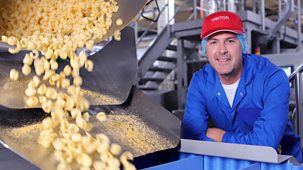
Series 9: 3. Cheese Curls
In this episode, Paddy McGuinness explores the secrets of the Walkers factory in Lincoln, to reveal how it makes 500 million packs of Quavers every year. \n\nPaddy begins by mee ...
02-09-2026
BBC 2
Inside The Factory
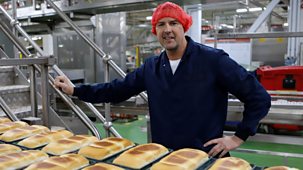
Series 9: 2. Sliced Bread
In a nostalgic episode of Inside the Factory, new presenter Paddy McGuinness visits the Warburtons bread factory in his hometown of Bolton, where he once worked as a youngster m ...
26-08-2026
BBC 2
Inside The Factory
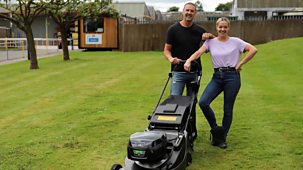
Series 10: Lawnmowers
Paddy McGuinness explores the secrets of Hayter lawnmowers at their factory in Hertfordshire, learning how they produce 15,000 mowers a year. They have been making the machines ...
11-02-2026
BBC 2
Inside The Factory
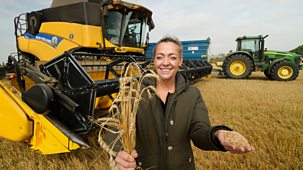
Series 10: Breakfast Cereal
Paddy McGuinness explores the Kellogg’s factory in Wrexham to reveal how it makes 120 million boxes of breakfast cereal a year, inside a huge factory covering an area bigg ...
03-02-2026
BBC 2
Inside The Factory
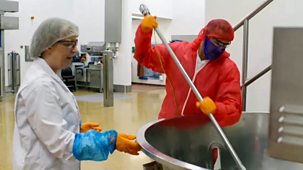
Series 10: Throat Lozenges
Paddy McGuinness explores the secrets of the Reckitt medicine factory in Nottingham to reveal how it makes 230 million tablets and lozenges every single week. Paddy is following ...
27-01-2026
BBC 2
Inside The Factory
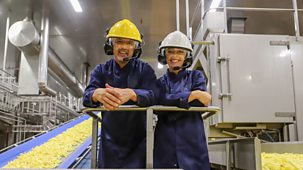
Series 10: Oven Chips
Paddy McGuinness explores the secrets of the McCain factory near Scarborough to reveal how it cuts, fries and freezes 80 million chips a day. Today, he’s following product ...
21-01-2026
BBC 2
Inside The Factory
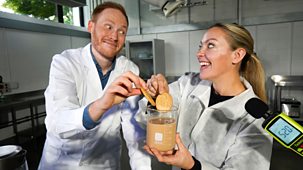
Series 10: Jammy Biscuits
Paddy McGuinness explores the secrets of the Jammie Dodgers factory in south Wales, revealing how they produce a whopping 4.4 billion biscuits a year. \n\nIn this episode, Paddy ...
14-01-2026
BBC 2
Most popular episodes of Inside the Factory
Inside The Factory
Series 10: Oven Chips
Paddy McGuinness explores the secrets of the McCain factory near Scarborough to reveal how it cuts, fries and freezes 80 million chips a day. Today, he’s following product ...
21-01-2026
BBC 2
Inside The Factory
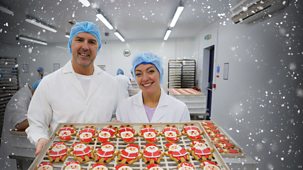
Series 10: Gingerbread
Paddy McGuinness explores the secrets of the Original Biscuit Bakers factory in Shropshire to reveal how it makes 100,000 festive gingerbread figures every week in the run-up to ...
01-01-2026
BBC 2
Inside The Factory
Series 9: 4. Flapjacks
In this episode, Paddy McGuinness explores the secrets of the Graze factory in west London, revealing how they make 40 million flapjacks a year. \n\nArmed with a trusty tasting ...
09-09-2026
BBC 2
Inside The Factory
Series 9: 6. Sausage Rolls
Paddy McGuinness explores the secrets of the McColgan’s bakery in Strabane, Northern Ireland, to reveal how it makes more than half a million sausage rolls a day. \n\nAft ...
23-09-2026
BBC 2
Inside The Factory
Series 10: Breakfast Cereal
Paddy McGuinness explores the Kellogg’s factory in Wrexham to reveal how it makes 120 million boxes of breakfast cereal a year, inside a huge factory covering an area bigg ...
03-02-2026
BBC 2
Inside The Factory
Series 9: 3. Cheese Curls
In this episode, Paddy McGuinness explores the secrets of the Walkers factory in Lincoln, to reveal how it makes 500 million packs of Quavers every year. \n\nPaddy begins by mee ...
02-09-2026
BBC 2
Inside The Factory
Series 10: Throat Lozenges
Paddy McGuinness explores the secrets of the Reckitt medicine factory in Nottingham to reveal how it makes 230 million tablets and lozenges every single week. Paddy is following ...
27-01-2026
BBC 2
Inside The Factory
Series 9: 5. Hardback Books
Paddy McGuinness visits the Clays book factory in Suffolk to learn how they produce 20,000 copies of Pride and Prejudice for publisher Penguin. The factory makes an astonishing ...
16-09-2026
BBC 2
Inside The Factory
Series 9: 2. Sliced Bread
In a nostalgic episode of Inside the Factory, new presenter Paddy McGuinness visits the Warburtons bread factory in his hometown of Bolton, where he once worked as a youngster m ...
26-08-2026
BBC 2
Inside The Factory
Series 10: Jammy Biscuits
Paddy McGuinness explores the secrets of the Jammie Dodgers factory in south Wales, revealing how they produce a whopping 4.4 billion biscuits a year. \n\nIn this episode, Paddy ...
14-01-2026
BBC 2